
Sometimes the best thing a leader can do is get out of the way
How Dublin's communications director built a culture that produces great content—and knows when to let it run

Lindsay Weisenauer watched the numbers climb and felt something she hadn’t expected: relief. She had not wanted to publish the reel. It was a kids’ dance video set to “Total Eclipse of the Heart,” shot in a Dublin, Ohio, park by a team of young staffers who seemed unbothered by the fact that their boss found the whole thing cringe-worthy. Lindsay had a television news background. She knew what good video looked like. This was not that.
She greenlit it anyway.
208,000 views. 11,000 interactions. The city’s top-performing post of the year—by a distance.
If you were anywhere near the path of totality during the April 2024 solar eclipse, you know how much cities leaned into that moment. Dublin’s “Dublin in the Dark” reel wasn’t just timely—it was alive. The song was perfect. The kids were genuinely excited. And it had exactly the kind of unpolished, spontaneous energy that stops a thumb mid-scroll. Lindsay still doesn’t love the production value. But she understands what happened.
“You just have to constantly think—the rest of the world isn’t looking at everything the way that you are,” she told me.
It’s not the luck of the Irish
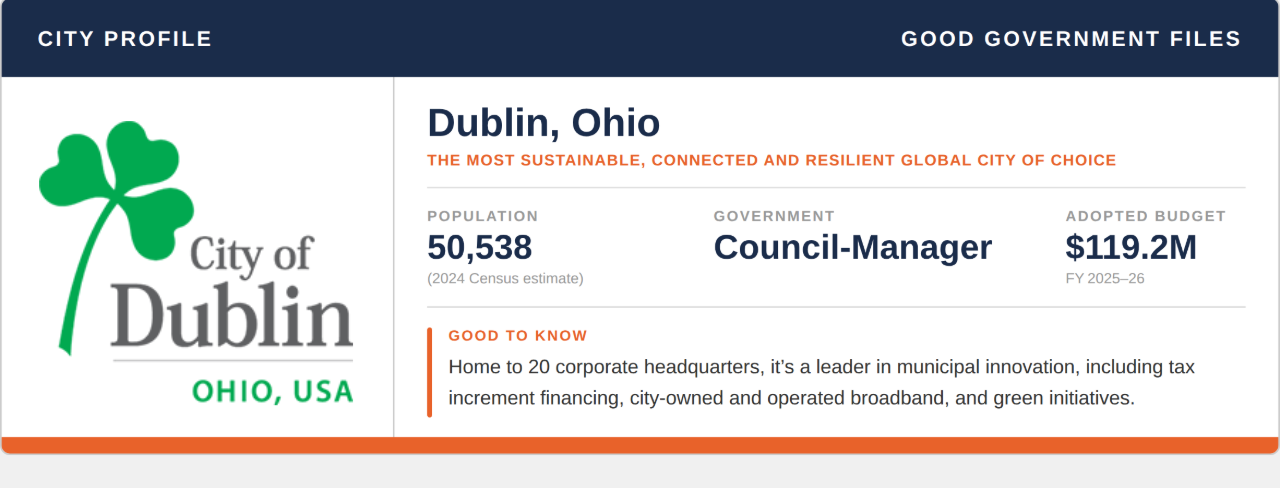
I’ll admit I’ve been watching Dublin for a long time—mostly from a distance, and mostly with envy. When I was running the communications shop in Round Rock, Texas, we competed against Dublin in national awards competitions regularly. Their print design work was exceptional. Year after year, I’d look at their pieces and think: That’s the standard. We’re chasing that.
What I’ve come to understand, years removed from that competition, is that Dublin’s consistency wasn’t a function of one talented person or one strong era. It was built on something more durable. As Lindsay put it when I asked about the city’s long track record: “There’s a really, really long legacy of exceptional communications in Dublin that was established long before I arrived.”
That sentence is the whole story. The excellence outlasted the individuals. And that only happens when an organization has built something structural—a culture, not just a reputation.
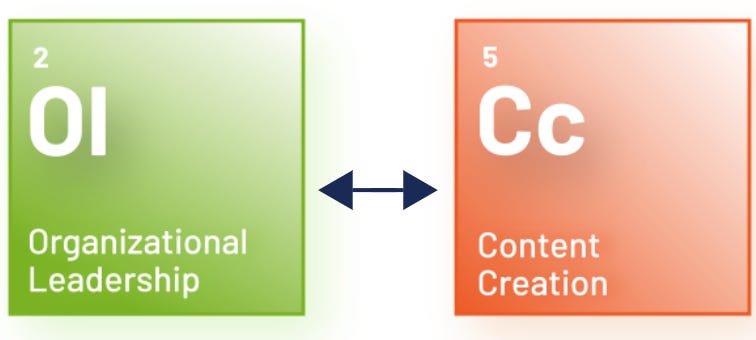
In my Five Elements of High-Performance Communications, that’s Element 2: Organizational Leadership. It’s the element that makes everything else sustainable. When leadership creates the conditions for creativity to thrive—when it trusts people, holds standards, and knows when to step aside—the content creation (Element 5) takes care of itself.
Dublin is a clear-eyed example of what it looks like when those two elements lock in together.
Nobody’s afraid to pitch
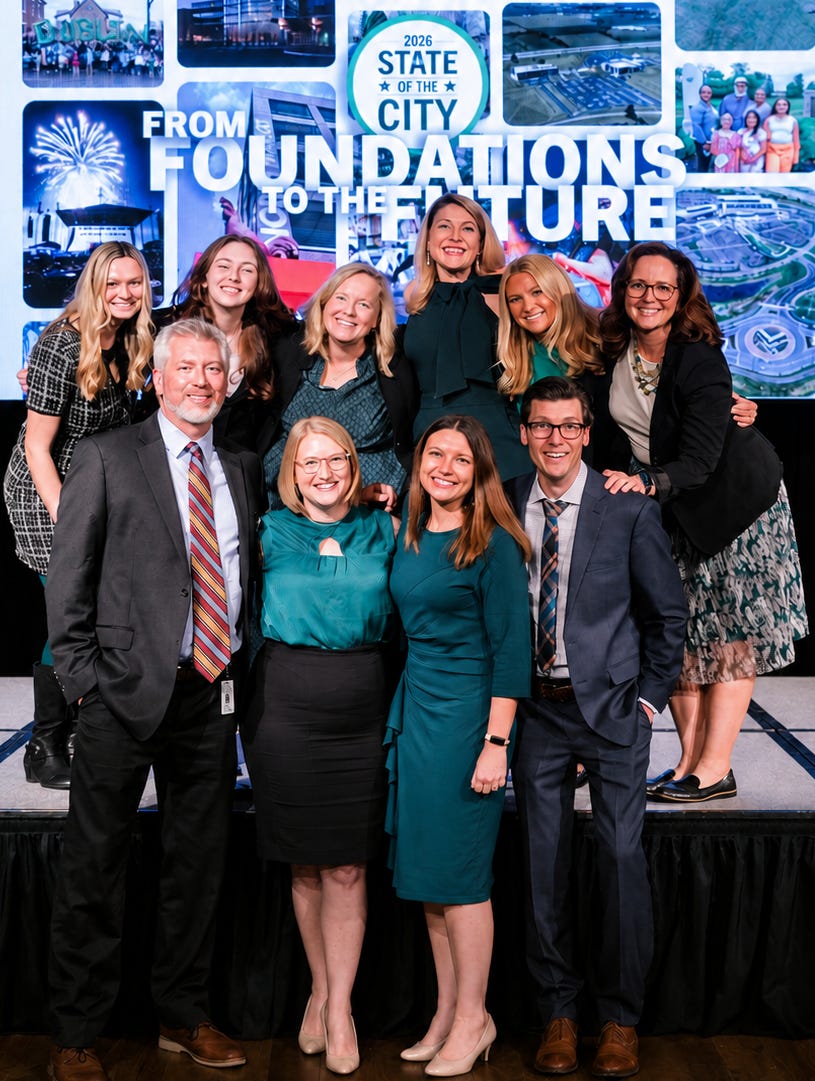
Lindsay has led Dublin’s communications and marketing team since before the short-form video era reshaped the entire profession. Her team spans every generation—from Gen Z interns to a deputy director who, though firmly Gen X, knows TikTok trends better than Lindsay does.
“Our diversity on our team, with the generations, is the strength of the team,” she said. “Everything is conversation.”
Content planning happens in weekly team meetings, where pitches always start with the message that needs to go out—not the trend someone wants to jump on. Lindsay is clear about that distinction. The younger staff bring cultural fluency she doesn’t have: they see trends coming weeks before she does. The more experienced staff bring something else: the discipline to ask whether a trend serves the story, or just looks fun.
The result, she says, is that nobody’s afraid to pitch. Nobody waits to see which direction the boss is leaning before speaking up. That matters enormously—because the ideas that get held back are often the ones worth having.
“Nobody’s afraid to bring any ideas to our team,” she said. “Even though we might say ‘let’s talk through this’ or ‘maybe this isn’t right for this,’ everybody is just robustly bringing ideas to the table.”
That’s a culture. And cultures don’t build themselves.
Still looks like Dublin
One of the more honest moments in my conversation with Lindsay came when I asked about the brand standards drift she’d described in a 3CMA conference session last year. Dublin’s print work had always been immaculate. Then Instagram Reels arrived, and suddenly there were stickers, five different font colors, and a feed that no longer looked like Dublin.
She didn’t dress it up. A high-performing shop had let its standards slip in a new format.
“None of our print pieces have slipped brand standards in any way, shape or form,” she told me. “But social media has infused this level of raw, unpolished content. And that is really where—it’s been just this transition.”
The response was to establish brand guidelines specifically for short-form video—consistent fonts, consistent colors, closed captions as a non-negotiable. The result: average engagement rate climbed from 4% to 6%, well above the government industry average of 1.5–3.5% across most platforms. More importantly, the content started looking like Dublin again.
This is the question Lindsay keeps coming back to: “How good is good enough? But still looks like Dublin.”
It’s not a question with a permanent answer. It has to be re-asked every time the platform changes, every time a new trend arrives, every time a Gen Z intern walks in with an idea that makes the TV news veteran in the room squint.
The mantra that gives her permission to say yes
There’s a phrase Lindsay used in her 3CMA session that I keep turning over. Her team’s social media mantra: right message, right audience, right medium. She uses it as a filter for creative decisions—a way to talk through a pitch before saying yes or no.
When the “very demure, very modest” meme-inspired mosquito prevention reel landed on her desk, it passed two out of three. Right message, right medium. The audience question was still open. Her gut said no. She said yes anyway—conditionally, telling the team to storyboard it first, then shoot it, then show it to her before anything went live.
By the time they brought her the finished reel, the trend had exploded. The audience question answered itself.
That’s not luck. That’s a leader who built a filter her team trusts, then trusts it herself—even when her instincts push back. The mantra doesn’t replace judgment. It creates space for judgment to operate without being overruled by personal taste.
“I don’t want to be the resident fun killer,” she said. “But I’m not opposed to being goofy if it’s the right tone and the right time and the right message.”
That balance—holding standards without killing creativity, trusting the team without abdicating responsibility—is what great organizational leadership looks like in a communications shop. And it’s what makes the content that comes out of it feel alive rather than managed.
Dublin didn’t build its shop around my Five Elements framework—I hadn’t written it yet when they were already winning awards. But that’s almost the point. The framework didn’t create the principles. It named them. High-performing organizations like Dublin and Round Rock operate this way because it works—not because someone handed them a playbook. The right message, right audience, right medium mantra is Dublin’s shorthand for the same instincts. Different words. Same thought process.
What high performers already know
Here’s the thing about the Five Elements framework that I come back to constantly: the elements don’t operate in isolation. They reinforce each other. Strategic clarity makes leadership easier. Strong leadership makes great content possible. Great content builds the brand. And all of it, done well, deepens the trust that makes citizen engagement meaningful.
Dublin shows what that looks like when it’s working. A culture built over decades, maintained through format changes and generational shifts, producing content that gets 208,000 views on a kids’ dance video—because the leader trusted the team, the team trusted the leader, and everybody stayed focused on the message.
The eclipse came and went. The reel lived on. And somewhere in Dublin, a 12-year-old’s mom—who happened to be Lindsay’s boss, the city manager—started watching Dublin’s YouTube shorts because her daughter wouldn’t stop talking about them.
Right message. Right audience. Right medium.
Sometimes you just have to get out of the way.
Partner Spotlight | SGR
Explore SGR’s Communications & Governance Leadership Solutions, which includes Will’s workshop on high performance communications. → LINK
Onward and Upward.