

Last week I shared how Austin Ellington welcomed a city’s angriest residents, one comment at a time, for 11 years. And created an award-winning, oft-imitated trove of creative content along the way. I left you with two questions. What’s behind that track record of success? And how do we know it’s working?
The answers: The first is an organizational system behind every reply Austin writes. The second is a stack of receipts.
A couple of years ago I set out to determine how Round Rock achieved and sustained a level of excellence. I reverse-engineered it, starting from the results and asking what was in place that produced them. What I distilled became the 5 Elements of High Performance Communications, the framework I write about here.
The work Round Rock does with social media is the best example I have of how that framework works in practice. It’s worth looking at one element at a time.
1. Strategic Priorities
It starts with the city council setting clear priorities. That sounds like a no-brainer until you see it at work in a comment thread. When Austin answered the resident who complained the city spent “billions” on parks, he didn’t offer his own opinion. He cited a council priority and a resident survey. The reply carried the weight of the whole organization behind it. Austin sits in on the council’s annual strategic planning retreat. He’s got a front-row seat when those priorities are set and can readily defend them.

2. Organizational Leadership
Then there is work culture. Round Rock treats communication as a leadership value, not a box on the org chart. The city manager backs the work. When new council members arrive, the veterans tell them to stay out of the comment threads and let the professionals in the comms shop handle it. Austin has the authority to answer hard questions on hard topics without running it past his director or city manager. In the six-plus years he worked for me, I can count on one hand the times he popped into my office for direction.
A test of organizational leadership, though, is what happens when a veteran leaves the organization.
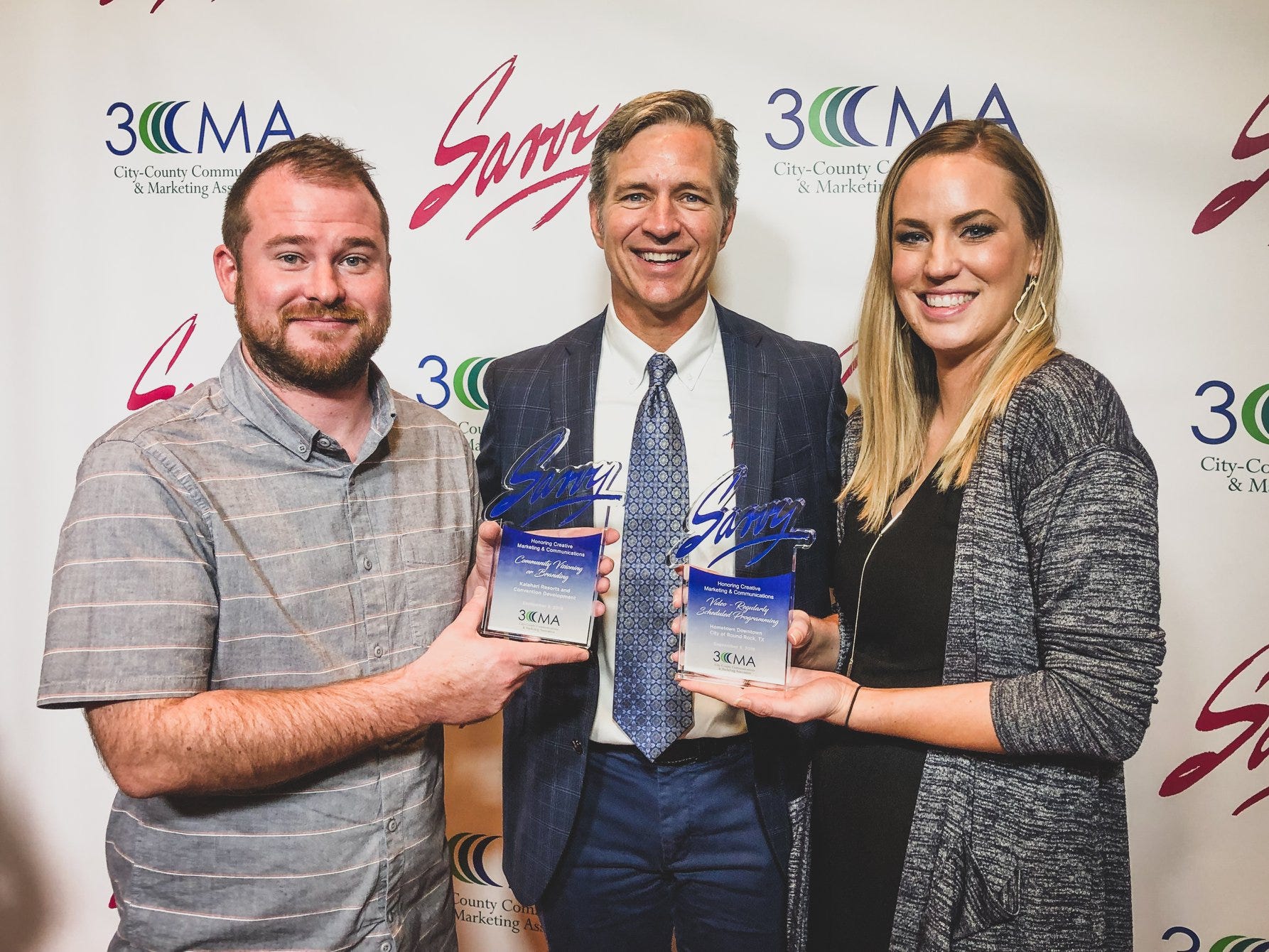
I retired at the end of 2021. Sara Bustilloz, who had been assistant director since 2018, moved into my role, and Austin moved up behind her. The productive work culture stayed the same. The awards keep rolling in, and public approval of city comms remains high (receipt below). One of Sara’s smartest decisions was to keep Austin working directly in the channels instead of promoting him out of the thing he does best. The social media operation has more of a team approach now, with Austin as the quarterback. A high-performing environment should outlast the people who built it. There have been changes to the org chart, but the leadership values hold steady.

3. Citizen Participation, Listening
Round Rock listens beyond the comment section: the biennial survey, neighborhood liaisons, and department directors meeting residents face to face in open houses to talk through the pros and cons of contentious projects. All of it feeds a reservoir of trust.
In a way, that listening is where Austin came from. The city surveys its residents every two years, without fail, and the trend data showed something clearly. Residents were turning in growing numbers to social media for city news as the old channels faded. We responded, making social a full-time job and hiring for it. The hire was a listening result and a leadership one. As I wrote last week, running the social platforms had outgrown what I could do as a director, and leadership means resourcing the work when it’s clearly outgrown you. That’s exactly what consistent listening, backed by leaders willing to act on it, is built to produce.
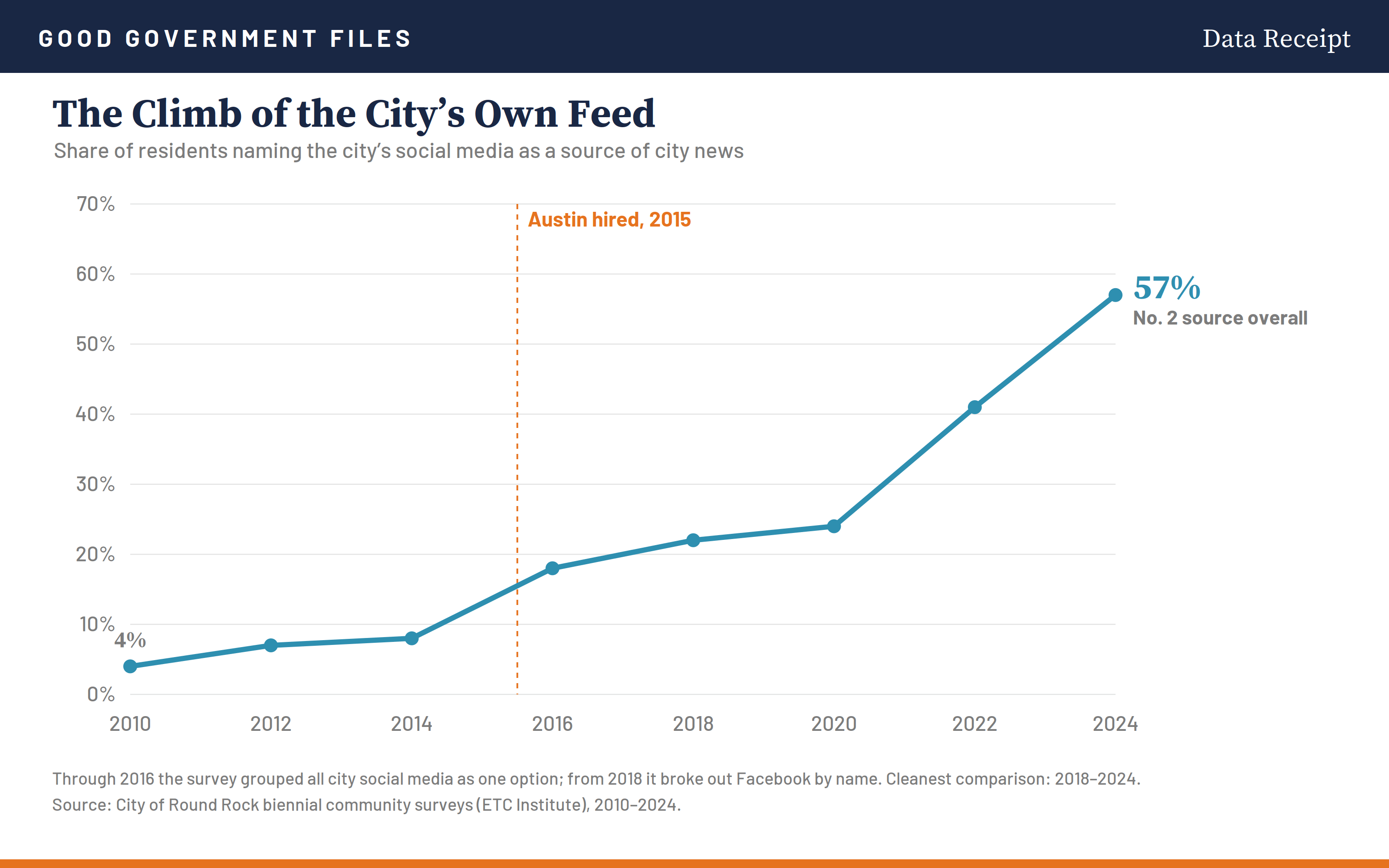
The chart above tracks the shift. The city’s own feed sat flat and in the single digits for years, then climbed after 2015. Now, the Facebook page is the No. 2 source residents cite for city information, behind only a high-quality, independent local publication. As the city listened, it increased resources toward the platforms residents were choosing. You’ll see the ROI on that practice in the chart below.

4. Branding
Round Rock’s brand is success. I’ve lived here since 1989, and have seen, over and over again, that what city leaders prioritize and envision comes to life. Being a family-friendly community is foundational. The personal greeting in the comment section is the same experience as walking into City Hall and being greeted by the welcoming smile of Cynthia Mouser at the counter. People underrate how much a consistent experience for residents builds trust.

5. Content Creation
The playful and funny weather memes I shared last week were not a detour from the serious work. Because Round Rock handles the hard questions about data center projects and tax rate increases with substance, it earns creative license for the fun. The vertical videos, the humor, the storytelling, all of it builds the audience that sticks around when a budget proposal lights up the feed. Creative content recruits the readers you need when the news turns not so fun.

The proof
Most local governments have a commenter like Scott “Chia” Holland. He’s been a fixture in Round Rock’s comments since about 2016, critical of nearly everything the city did. No single clever reply turned him around. Years of straight, respectful answers did. Today he shows up in those same threads to defend the city, sometimes before staff can, while holding onto his right to disagree when he wants to. That is the Ritz idea proven over a decade, and it is League City’s troll-turned-defender all over again, this time from inside the feed.
Now for some numbers.
Start with the issue residents care about most. Traffic is the No. 1 concern in Round Rock’s survey, and transportation is a council priority, so the city works hard to show it is working on the problem. Over the past year, transportation updates drew roughly 1.96 million impressions and more than 133,000 engagements on Facebook and Instagram.
Then the receipt that matters most. When Round Rock asks residents to rate the city’s communication, 69 percent say they are satisfied. The national average is 37 percent. The Texas average is 27 percent.
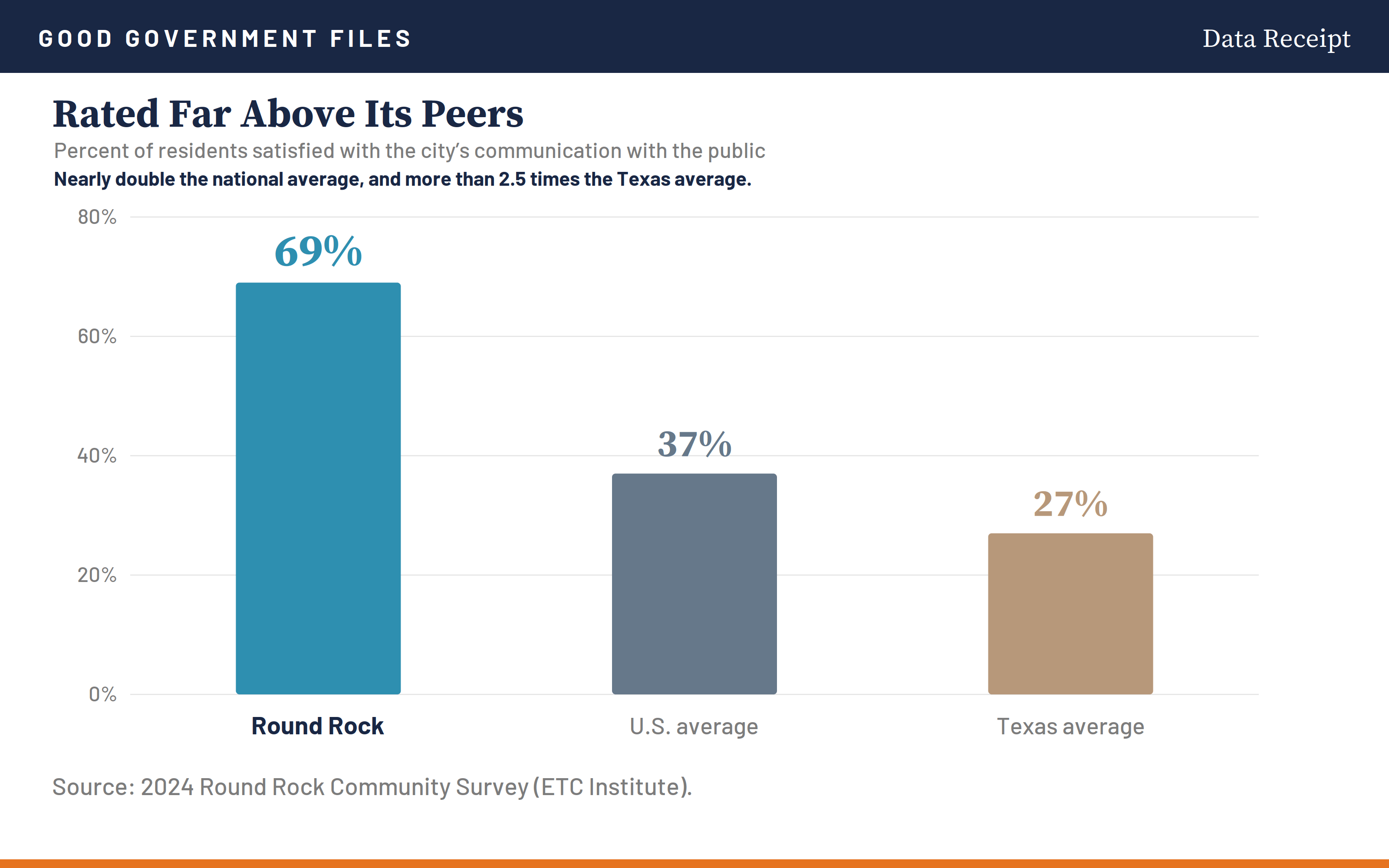
And communication is no outlier. Round Rock beats the U.S. average in 46 of 49 service areas the survey measures, and the Texas average in 45 of 49. What that tells you is there is a good story to tell. Communication scores high because the whole organization is high-performing, which is exactly what the 5 Elements working together are built to produce.
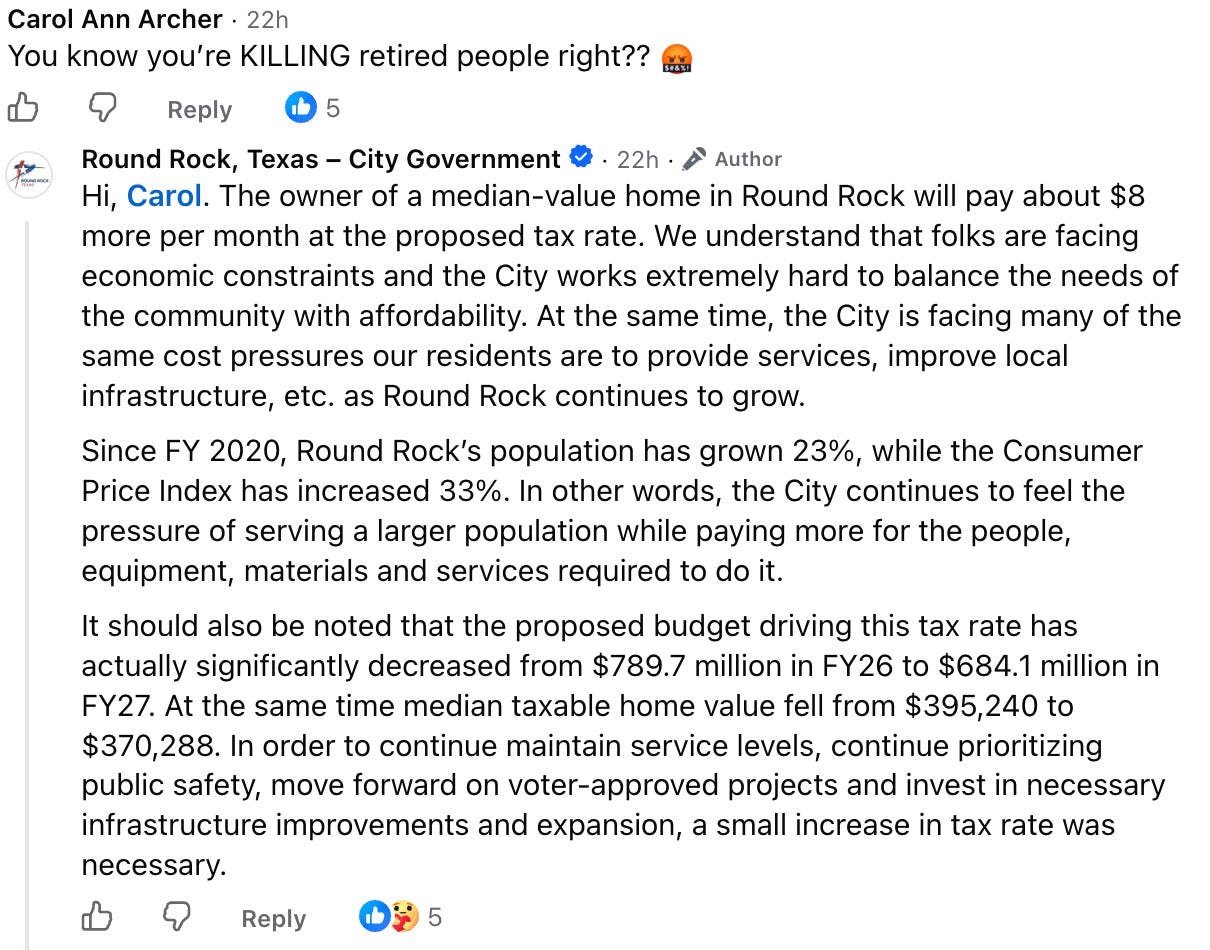
The freshest receipt is happening as we speak. Round Rock is in the cauldron of budget and tax-rate season, the ugliest stretch of the civic calendar, and the comments show it. Austin is in there answering them, one at a time, with the same grace and the same specifics. Here’s an example from earlier this week:
And on that note, we wrap up this series. Three cities, three ways to face the same wall of negativity. Georgetown reshaped the conversation from the top. League City took its fiercest critics out of the feed and into a classroom. Round Rock stays in the feed and wins it, comment by comment, over years, with all 5 Elements working at once.
There is no single playbook. There is only the one that fits your city and the team and systems you can put behind it.
Onward and Upward.
You have seen Round Rock’s numbers. If your organization’s are further off than you would like, the gap is rarely the quality of any single reply. It is whether the 5 Elements behind them are in place. Finding what is missing and building it is the work I do with cities and other public agencies. When you want communication that earns trust you can measure, let’s talk.