
How Exactly GGF Gets Paid
Sponsorships are coming to Good Government Files. Here's what that means for you—and what it doesn't

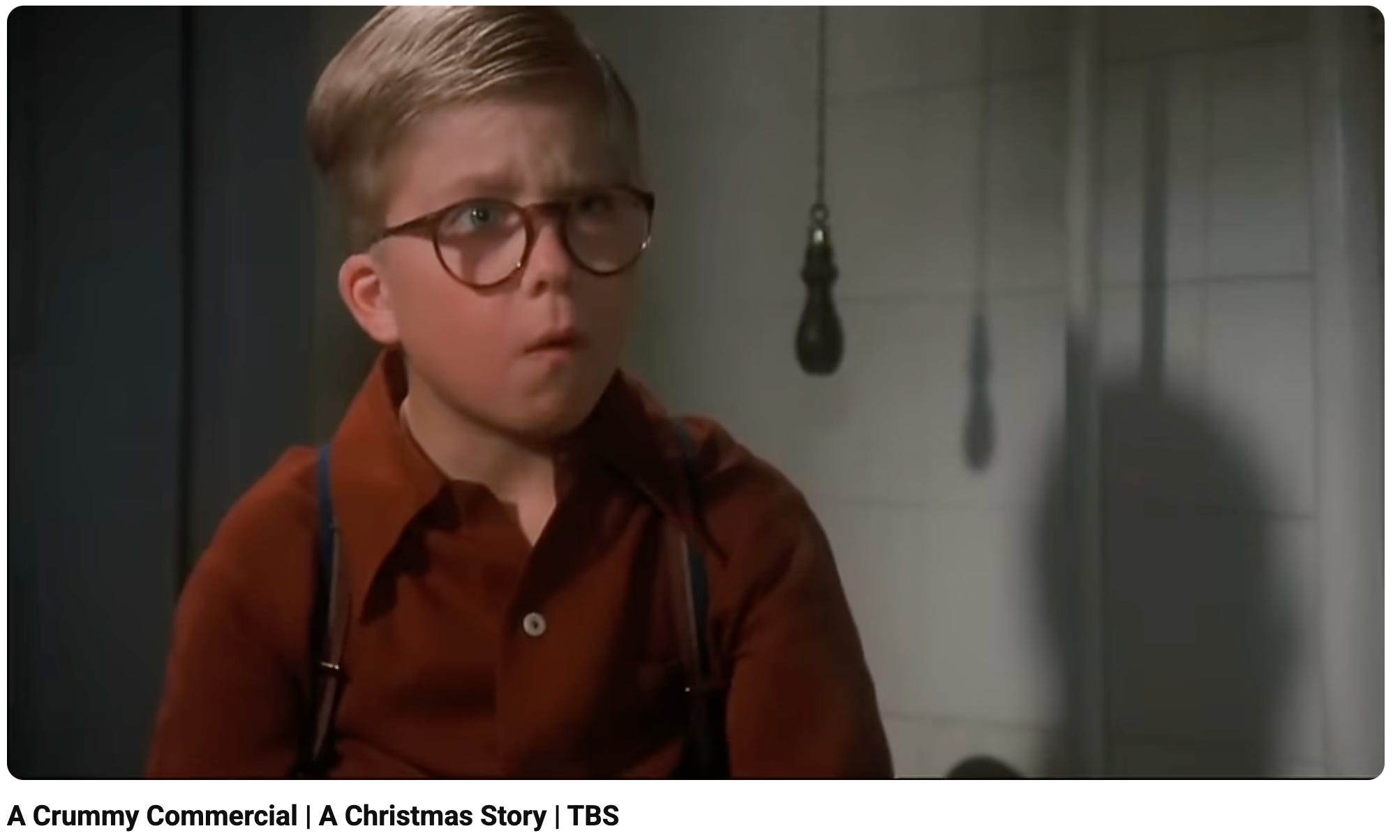
That look on Ralphie’s face—led somewhere meaningful, only to find a sales pitch waiting—is the feeling I’ve spent 30 years trying to prevent in public communications. It’s also the thing I most want to avoid creating here.
So let me be straight with you about what I’m doing.
Before I started local government work, I spent the first decade of my career as a newspaper reporter and editor. A journalism degree from UT Austin gave me a framework for thinking about sources, conflicts of interest, and the line between content and advertising. Those instincts followed me into local government and they’re still with me now. They’re the reason I’m writing this.
I’ve spent nearly three decades in this field—leading communications in Round Rock, Texas, for 24 years, serving on the boards of 3CMA and TAMIO, judging hundreds of entries in national and state competitions. In 2018, 3CMA named me Communicator of the Year. Citizen satisfaction with city communications in Round Rock came in nearly three times higher than the state average and twice the national average. The city placed in the top 10 percent of communities nationwide across all services. Those results came from building the right systems, making the right decisions over time, and treating trust as non-negotiable.
I’m telling you all that because context matters when someone tells you they’re adapting their business model.
I started GGF to keep contributing after I retired. I write it because I love it. The plan was to build a paid subscriber base large enough to justify the time—and I do have paid subscribers. God bless every one of you. But it’s not enough to sustain what this newsletter has become, and I’d rather be honest about that than quietly change course without telling you.
Substack’s model works beautifully for some writers. For others—especially those writing for a professional niche rather than a mass audience—it produces loyal readers who aren’t necessarily paying ones. That’s where I am. The readership is real. The engagement is real. The revenue isn’t keeping pace.
So, I’m adapting. Right now, connecting practitioners with vendors is one of the harder problems in business generally and local government specifically. There are tools and services that genuinely help local gov teams do their jobs better—and the people who need them often don’t know they exist. I want to help close that gap. That’s good for practitioners. It’s good for vendors who deserve to be found. And if it helps me keep doing this work, that’s good for me too.
I don’t have a roster of partners under contract. I’m in early conversations with a couple of organizations, and I’m being deliberate about it. What I’m building is an experiment, and I’m telling you about it before it’s fully formed because you deserve to know the intent going in.
Here’s what that means in practice, and what it doesn’t.
It means I’ll occasionally feature a partner’s work—a case study, a mention in a LinkedIn post, a reference in a training session—when it’s genuinely relevant to what I’m writing about or teaching. It will always be clearly disclosed.
It means I’ll only work with vendors I’d recommend anyway. If I wouldn’t tell a former colleague to call you, I’m not taking your money.
It doesn’t mean anyone gets editorial control over Good Government Files. Not ever. I retain final say on everything that goes out under my name. If a product has real limitations, I’ll say so. If there were implementation challenges, we’ll talk about them. Real is more valuable than polished.
It doesn’t mean I’m endorsing everything a partner does across their entire business. I’m saying I believe in this product or service for this audience based on what I know.
If you’ve been reading GGF for a while, you’ve already seen this in practice. I’ve been running a Partner Spotlight at the bottom of the newsletter for the past few months, featuring SGR, an organization I’ve consulted with since retiring. No one complained. More than 100 people clicked. That experiment gave me the confidence to formalize what I was already doing.
One more thing: sometimes an organization covers my conference expenses in exchange for content. When that happens, I disclose it. The content is still mine—written my way, published my way.
I’m not interested in being someone’s Ovaltine. I’ve spent three decades building a reputation in this field, and I’m not trading it for a sponsorship check. What I’m doing is being honest about how independent journalism and thought leadership gets sustained—and choosing partners carefully enough that the work stays worth reading.
If you’re a practitioner with questions about any partnership you see in GGF, ask me. I’ll tell you exactly what the arrangement is.
If you’re a vendor and you think there might be a fit, reach out the same way. Know the answer might be no, and the reason will always be the same: I only work with people and products I genuinely believe in.
That’s the deal. Thanks for reading.
Onward and Upward.