
She Threw Her Head Back and Laughed. That Was My Answer.
What turning off the comments did for the people who used to manage them

The final part of a three-part look at local governments and their social media comments. Part one told two cities’ stories of turning off comments. Part two was my own turn. This one is about the people who run the page.

It was New Year’s Eve, and Kara Roberson was getting yelled at on Facebook.
The man was furious about something she doesn’t fully remember, because she’s worked to forget it. What she remembers is that he knew who she was, and he cornered her by name on a public feed, on a holiday.
She sat there, pulled away from her family, and thought: I don’t owe him this.
Kara runs communications for Wentzville, Mo., and she’s good at it. The lesson she took from that night wasn’t about one angry resident. It was about herself. “I had kind of set us up to fail,” she told me, “because I tried so hard to be all the things and respond in all the ways as quickly as possible.” Customer service matters to her, deeply. But she’d never drawn a line, for herself or for the public, and the gray was wearing her down.
I wrote two Deep Dives on burnout among local government communicators earlier this year. The veterans I talked with, Marnie Schubert, Miriam Dickler and Kara, kept circling the same hard truth: the damage isn’t the once-a-decade disaster. It’s the steady drip of small crises, day after day, until you stop noticing what it’s doing to you.
The comment section is one of those small crises, a wound that reopens every morning, and every so often it opens on a holiday.
The relief nobody was chasing
So here’s what happened when some cities set that weight down.
I asked Sue Burness, Dunedin, Fla.’s communications director, how her life and work had changed since the city turned off its comments. She didn’t answer with words. She threw her head back and laughed. Her body got there before the sentence could.
Kevin Keller in Copperas Cove, Texas, has his own version. He can take a long walk with his wife now without bringing his phone. For 15 years the alerts from the Facebook page came with him everywhere. Now they don’t.
And Cheryl Mall, the public information officer in Melbourne, Fla., another city that turned off comments recently, named the strangest part. “I didn’t realize the toll that was taking on my mental/emotional health every day until they were gone,” she wrote.
One thing all three would tell you, and I want to be clear about it, because it matters. Relief was not the reason any of them turned off comments. They did it for the trolls and the misinformation, and to protect their staff from abuse. The lift in their own wellbeing was a benefit nobody was chasing, which is exactly why it’s worth naming. Nobody decided based on it. Everybody felt it.
It’s not just the communicators
After part two ran, Sue sent me a note that broadened the issue.
“I just had a city planner tell me how much everyone feels the difference now that comments are off,” she wrote. “We all feel it.”
You could hear the same thing from the dais long before the vote. Dunedin, the city at the center of part one, has a commission that watched this happen in real time and said so plainly, unwilling to let commenters keep taking unfair shots at staff. That work session was the most clear-eyed public reckoning with social media I’ve seen from a group of elected officials. The mayor had already stopped pointing residents to Facebook, telling them to reach her another way, because she could see what the platform had become.
When the relief reaches the communicator, the planner, and the elected official alike, you’re not looking at one person’s resilience. You’re looking at an organization’s health. And organizational health is not a communicator’s private burden. It’s a leadership responsibility.
What leadership owes the people doing this
Which brings me to the argument I most want the managers and directors reading this to hear. It sits where two of my Five Elements of High Performance Communications meet.
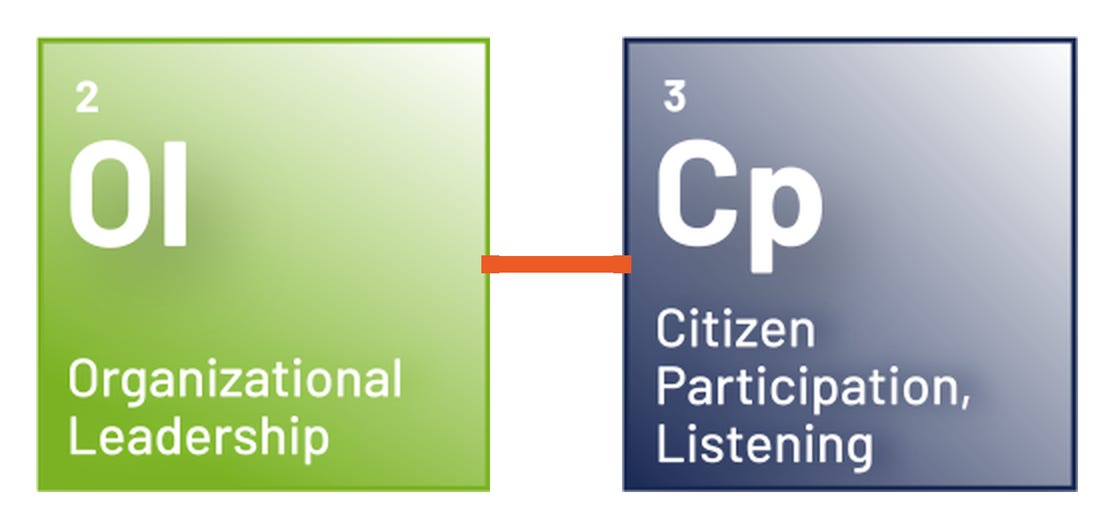
Sara Bustilloz runs communications in Round Rock, Texas, on a team that never turned its comments off and does the work about as well as anyone. When she explains why Round Rock is in a good place, she doesn’t credit talent. She credits resources. “You need to give more resources, not more work, to your communicator,” she told me last year, “because it’s a high-burnout rate.” Responding to comments, she added, isn’t an entry-level job. It takes someone senior enough to know the whole city.
Hang onto that thought, because it’s the tradeoff at the center of all of this. Round Rock keeps its comments on. It has a talented, well-supported team. And even there, Sara is telling leaders plainly the work burns people out and has to be resourced with room to breathe. If the best-resourced shop still needs that room, the one-person shop has none.
That’s the thing about this whole business. Everything is a tradeoff. Keep the comments on and you keep a real channel to residents, and you pay for it in the daily toll on the person managing it. Turn them off and you spare that person, and you give up something too. There’s no move that’s all upside. Kara found her balance by turning off the notifications on her phone, not to check out, but to stop getting pinged every five minutes so she could step away and come back whole. That’s a small version of what every shop needs, and what only leadership can actually provide.
The tradeoff, and what comes next
This isn’t a case for turning off your comments. Most of you will keep them on, for the good reasons Jeff Newpher laid out last week. The point is to see the cost clearly, whichever way you go, and to build in the time and space your people need to recover from a job that doesn’t stop.
The good news is that the cities keeping their comments on aren’t just gritting their teeth. At last month’s TAMIO conference, dealing with online negativity came up in session after session, which tells you how many communicators are hunting for a better way. Some are finding one. Georgetown leans hard into positive marketing. League City invited its trolls into the citizen academy. I'll spend time on those approaches in August, because they deserve their own space, and because after three weeks in the comment section, we could all use a story about what’s working.
For now, whether your comments are on or off, watch the people running the page. The weight is real even when they’re laughing it off. Especially then.
Onward and Upward.
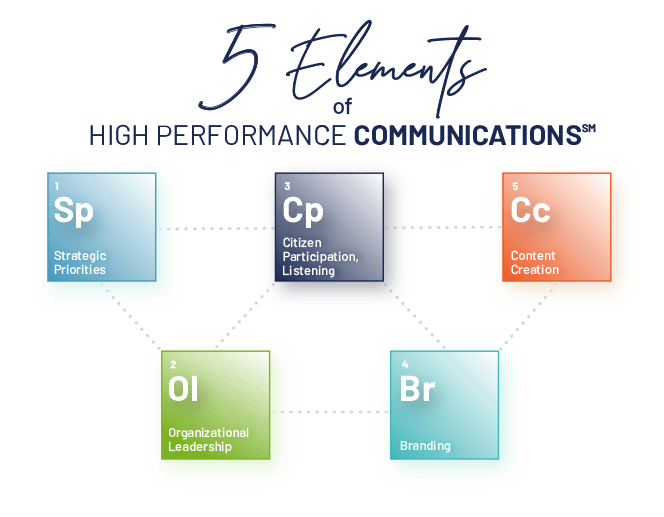
If your organization is wrestling with how to engage residents, protect your team, and hold onto trust while you do it, that’s the work I care about most. The Five Elements of High Performance Communications is the framework I use to help cities think these questions through instead of reacting to them.
I work two ways. One on one, directly with your team. Or through a governance retreat with Strategic Government Resources, where we can get your whole leadership group around one table. Either path starts with a conversation, so let’s connect.