

There’s a real paradox about internal communications. It’s undeniably critical to a healthy and productive work culture in local government. And the communications professionals in the organization often have little if anything to do with it.
Comms staff are in a unique position to have real insight into that dilemma. They’re the ones tasked with the increasingly sophisticated ways we reach out to engage the public. We ask: How do we reach people who speak different languages? How do we make sure information finds them where they are, not where we think they should be? That work puts comms pros in daily interaction with folks from across the organization, so they hear the frustrations first-hand.
LaVonia Jones, community outreach manager for the City of Roswell, Georgia, decided to put together a program that treated her fellow employees with the thoughtfulness and care we extend to residents. Jones shared her experience at the recent 3CMA conference in Denver. While she covered the basics, like the new intranet and employee newsletter and town hall meetings, what really stood out was the process she used to manage up.
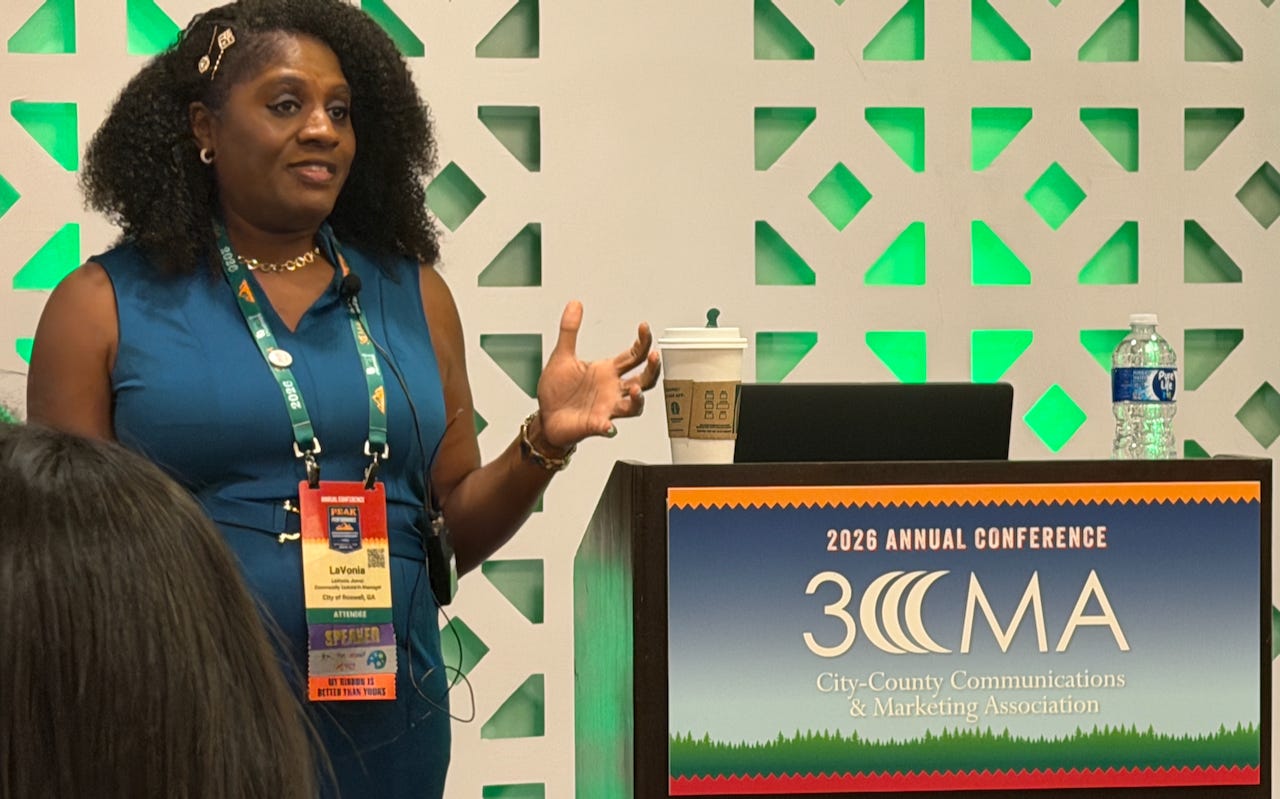
In short, she addressed an issue that simmers just below the surface for many comms staffers. How do you make a real difference, how do you manage up, when your day-to-day job is running the city’s social media accounts (which happens to be LaVonia’s primary responsibility)?
The answer is this: by working hard, working smart and applying just the right amount of creativity when the situation calls for it.
The diagnosis
Jones started by listening. The city surveyed roughly 1,000 employees, and 250 responded. The feedback was consistent (and familiar):
We’re in silos
Information feels fragmented and inconsistent
We’re disconnected from leadership
Some context: Roswell had recently moved to a new organizational structure, pulling away from a corporate model where everything filtered through a C-suite (chief financial officer, chief operating officer, and the like). That distance had sent a message: leadership is them. The rest of us are us. That’s a recipe for a large, steaming bowl of discontent for the rank and file.
The real problem wasn’t lack of information. The city produced flyers, emails, websites, announcements. They had plenty of channels.
“What we were missing,” LaVonia said, “was a cohesive ecosystem.”
So she built it.
Have a plan, not just a complaint
Here’s where LaVonia’s approach becomes a masterclass in influence leadership. She developed a one-year internal communications plan and took it to her HR director and deputy city administrator. She presented a strategic roadmap: quarterly town halls, structured content timelines, monthly newsletters, a new intranet. It was ready to execute.
She got the thumbs up. And then she ran.
Working smart, working hard
The ecosystem LaVonia built has six elements, designed to address the pain points surfaced in the employee survey:
Informed with timely, relevant flow of information
Connected via meaningful interactions and community
Recognized by valuing and celebrating employee contributions
Heard by providing clear channels for feedback
Engaged by cultivating participation and belonging
Accessible Anywhere by sharing information seamlessly across many platforms
Playing off HR’s recent Bee Well fitness initiative, LaVonia created The Hive, a SharePoint-based intranet, to be the central hub. It is people-centered (the home page has three photos of groups of employees), features timely news like updates after each council meeting, and provides one-stop-shopping for HR forms, policies, etc.
Then there’s The Buzz, a monthly employee newsletter, which transitioned from standard HR fare to a genuine window into organizational life. Built on FlipHTML, there’s a standing feature called Behind the Scenes, where employees tell their own story. LaVonia has liaisons from each department who feed the kind of news that means something to co-workers: certifications, awards, milestones. There’s a button to “Submit your story.” It also covers the practical stuff: promotions, new hires, service anniversaries, the pay calendar.
Finally, there are the town halls. Leaders were fine with the intranet and a more thoughtful, employee-focused newsletter. But a town hall? When employees were frustrated about the recent organizational changes? What leader wants to face an angry mob? So, LaVonia got employees to submit questions in advance. Good thing, because some were NSFW.
“I massaged those questions,” LaVonia said. “They were a little rough at the beginning. Really angry.”
But she didn’t hide them. She reframed them, prepared leaders for what was coming, and made sure the town halls became moments of genuine dialogue instead of defensive posturing.
That’s managing up. Figure out what leaders need to feel confident, and build a path that gets them there. The first two town halls were virtual. They went so well, the third was in-person.
Details matter
LaVonia took the opportunity to leverage the goodwill generated by the first two to create something special for the live town hall. She wanted the meeting to feel like a fireside chat, so they projected a cozy fireside scene onto the big screen on stage. The city name was in huge block letters on the stage.
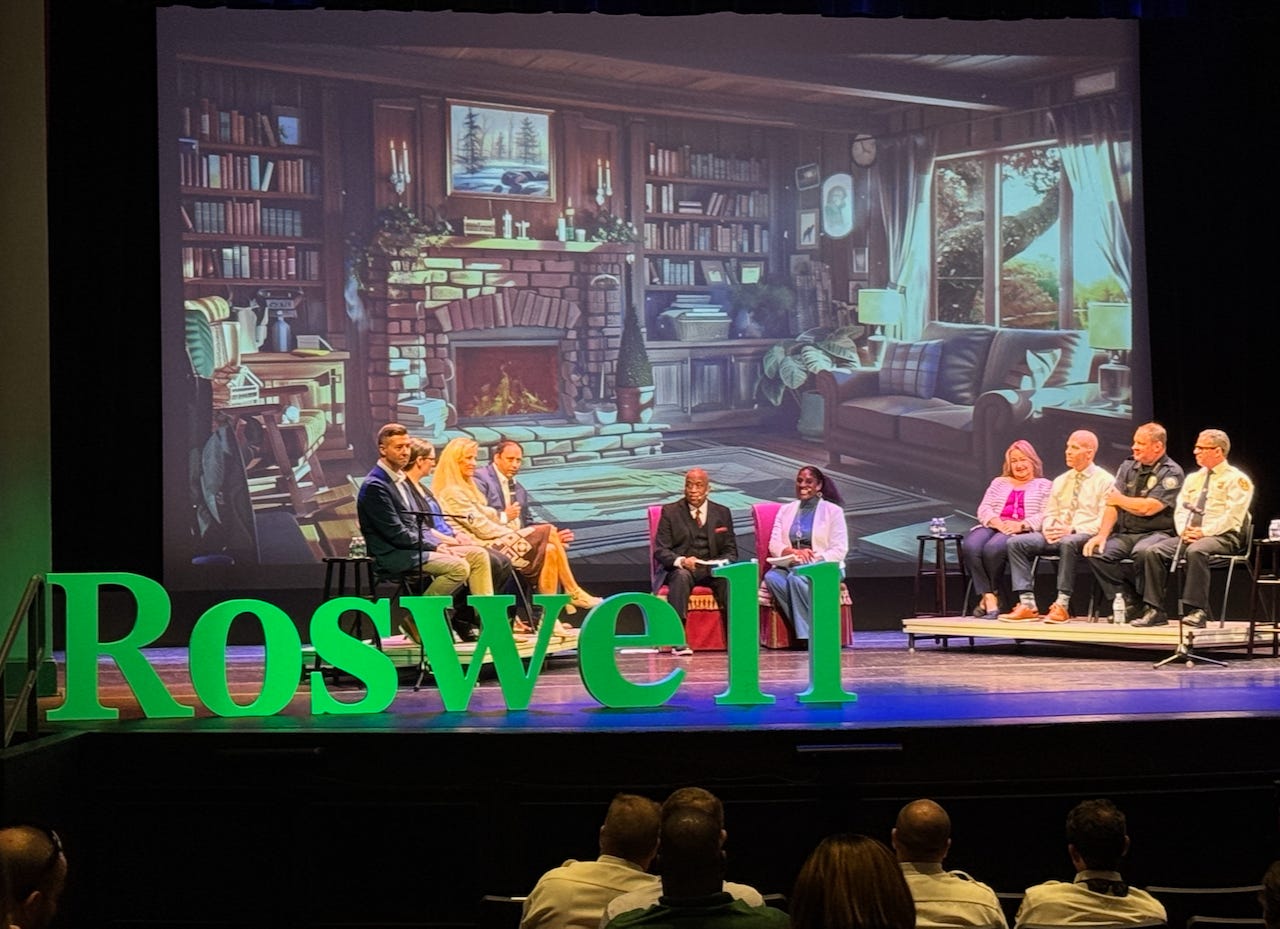
And here’s the genius move, when comms shop creativity makes the difference between a good meeting and a great one. Leaders walked on stage to their own walk-up songs1. Have a look and a listen.
The intro to Curb Your Enthusiasm. Enter Sandman by Metallica. Fireman by Lil Wayne. The variety told a story—these are different people with different personalities and values.
For those workers who couldn’t attend the town hall—911 dispatchers, police on patrol—they got the same box lunch as everyone else. That’s how you begin to tear down the wall between us and them.
‘Culture is shared ownership’
Later in the process, LaVonia built on the program’s success by encouraging departmental ownership of work culture. (This stuff can’t live in the comms shop forever. We’ve got social media trolls who need to be loved on.)
She asked department directors: What are you already doing to build culture in your departments? She documented what was working, made it visible, and created a toolkit so other directors could see what their colleagues were already doing well and adapt it.
“Culture is shared ownership,” she said.
Amen and amen.
Purpose, trust, and why this matters
Research on what actually drives human performance shows that once you pay people enough to take the issue of money off the table, three factors lead to better performance as well as personal satisfaction: autonomy, mastery, and purpose2. Purpose, specifically, is the sense that what we do produces something meaningful beyond ourselves. That’s what public service is all about.
Roswell’s internal communications system works because LaVonia built it around purpose. The Hive keeps people informed and part of the bigger picture. The Buzz celebrates their contributions and milestones. The town halls tell employees they’re seen and heard by leadership.
That’s purpose. That’s belonging. That’s trust.
And when you build trust internally, that informs the work you do externally. That public trust, in such short supply these days, is what helps your elected leaders make tough decisions on issues like Flock cameras, data centers, and tax rates.
Onward and Upward.
This story is more proof of how organizational leadership and listening produce real results. Elements 2 and 3 of my High Performance Communications framework are on full display here. But they don’t exist in isolation. All five elements work together as an interdependent system to build the trust your organization needs.
If you want to understand how that system works—and how to apply it whether you’re communicating with residents or your own staff—we’ve got a workshop that goes deeper.
A walk-up song is a short, energetic music clip played as a baseball or softball player walks from the on-deck circle to home plate.