

This week’s GGF is different from my typical Deep Dive because I’m at the 3CMA Annual Conference in Denver. What follows will be some on-the-ground reporting and sharing some of the fun stuff that inevitably happens at this gathering of local government communicators from across the country. Since I’m not speaking this year, I’ve decided to make it more of a listening tour. I’ll be attending sessions, chatting with attendees about what’s on their minds and then sharing some thoughts here.
I’ll be writing this as I go, so don’t expect high polish. I want to get at the gut-level issues in the profession by listening to the people in the trenches. We’ll start here: Members voted on a long list of breakout session proposals, so what does the conference agenda tell us about the state of the profession?
Times are tough, but so are the folks on the front lines
My analysis of the agenda shows a group of professionals taking a beating but not backing down from the fight. The word “trust” shows up 33 times in the descriptions of the 24 breakout sessions. In an age of misinformation and AI slop, today’s communicators are here to arm themselves for battle.
And they are honest about the toll. There are sessions on self-care and reminding themselves the work they are doing is important if often under-appreciated.
Attendees are looking for help in growing their leadership skills. There’s a pre-conference session and multiple breakouts on the topic, and the closing keynote is on influence and presence. People definitely see communications as not just a support function, but as a governance necessity.
There not as many sessions on AI as I thought there would be. There’s a pre-con and two breakout sessions that promise insights on how to use these tools more effectively and within the boundaries necessary for government.
Last but by no means least, many sessions are focused on the humanity in our work. From citizen engagement that reaches people where they live, to using employees to help tell our stories, local government communicators have not lost sight of what’s most important: the people we serve in our communities, and the people we serve alongside in our organizations.
Speaking of people
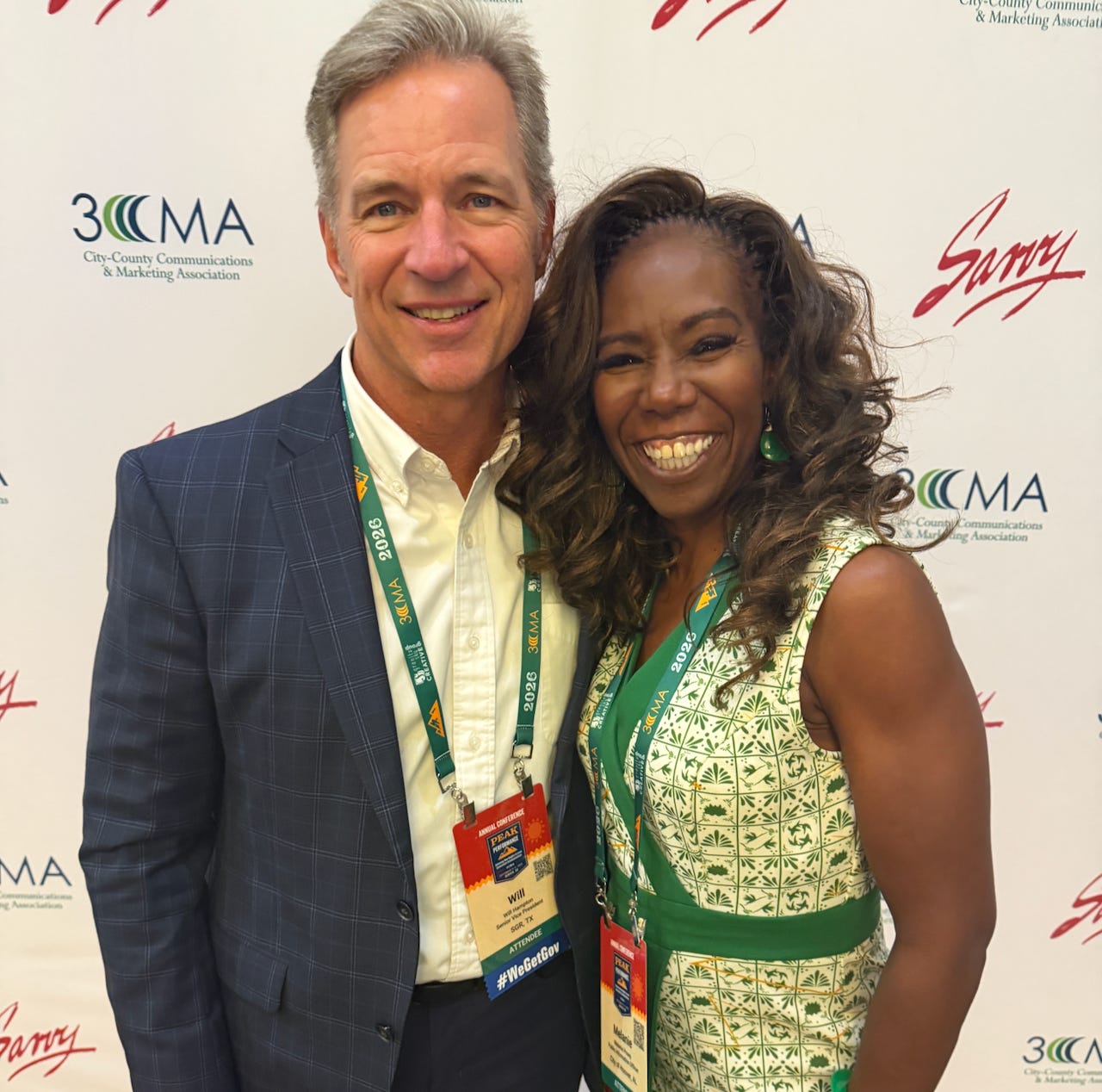
The first attendee I met is Melanie Posey, from Hoover, Alabama. We wound up on the 16th Street shuttle bus together after taking the light rail from the airport to Union Station downtown. She helped me figure out the bus stop where we needed to get off. I helped navigate the short walk to the hotel. People helping people. It’s what this conference is all about, and I was happy to make a new friend as well. I caught up with Melanie again after the Communicator of the Year Award announcement.
Speaking of Communicator of the Year
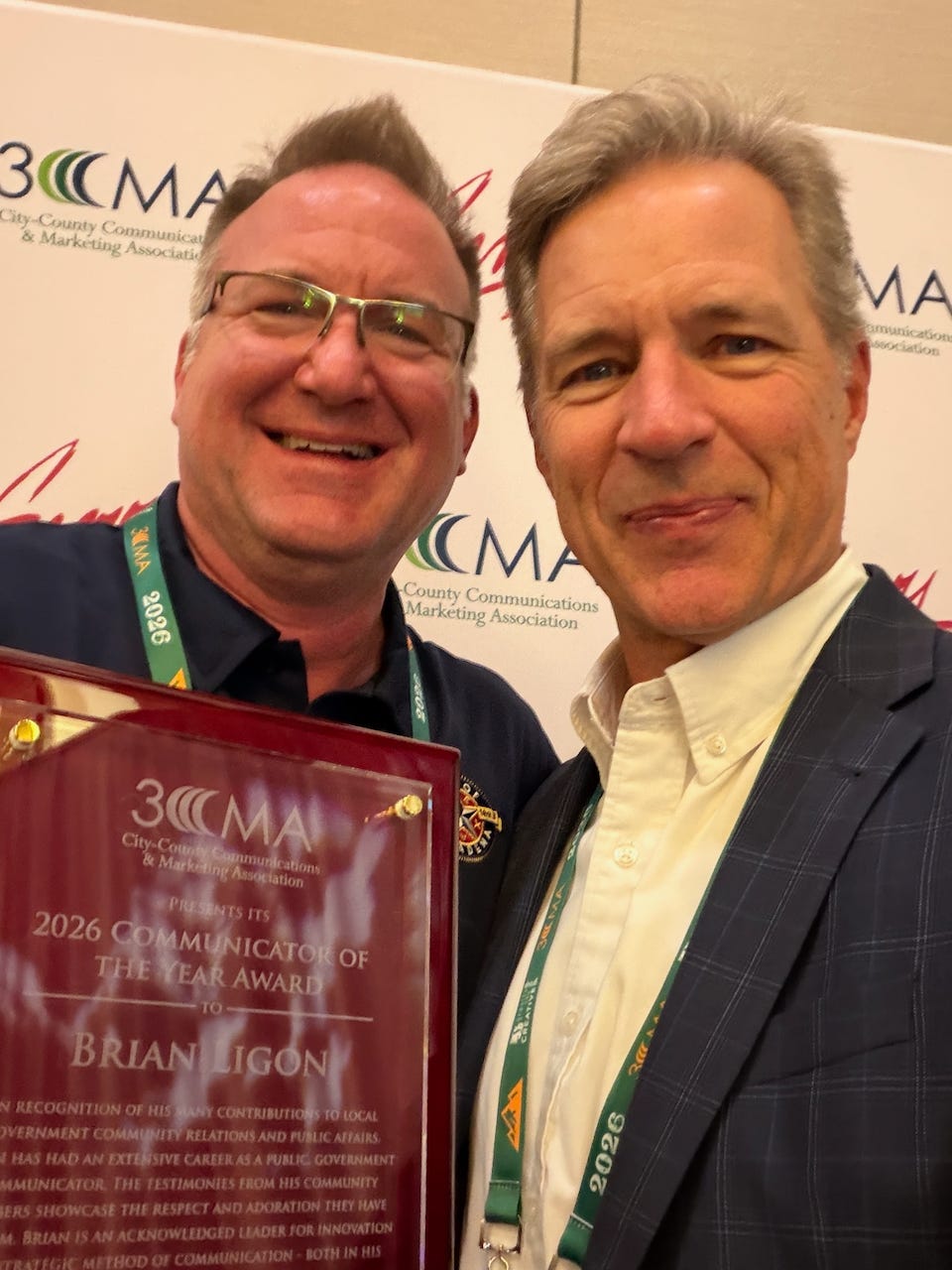
The recipient of one of our profession’s most prestigious honors is Brian Ligon, director of community relations for the City of Pasadena, Texas. Brian’s not just an uber-talented communicator, he also gives back to the profession. Most notably, he organized the groups of volunteer PIOs in Texas who helped our neighbors in Kerrville last summer when a massive flood devastated that community. He’s also spearheaded the Government Communicators Day effort that brings much-needed recognition to the work we do. Standing at the podium after a well-deserved standing ovation, Brian was at a loss for words. That’s something I never thought I would write about my good friend. (I had the great fortune to work with Brian in Round Rock when he began his local gov career.) The man can talk, and has a deeply resonant voice (some would say God-like) to boot. The good news is, he’s typically got something interesting or important to say. I can’t imagine a more worthy recipient. Congrats, Brian!
Straight from the hallway
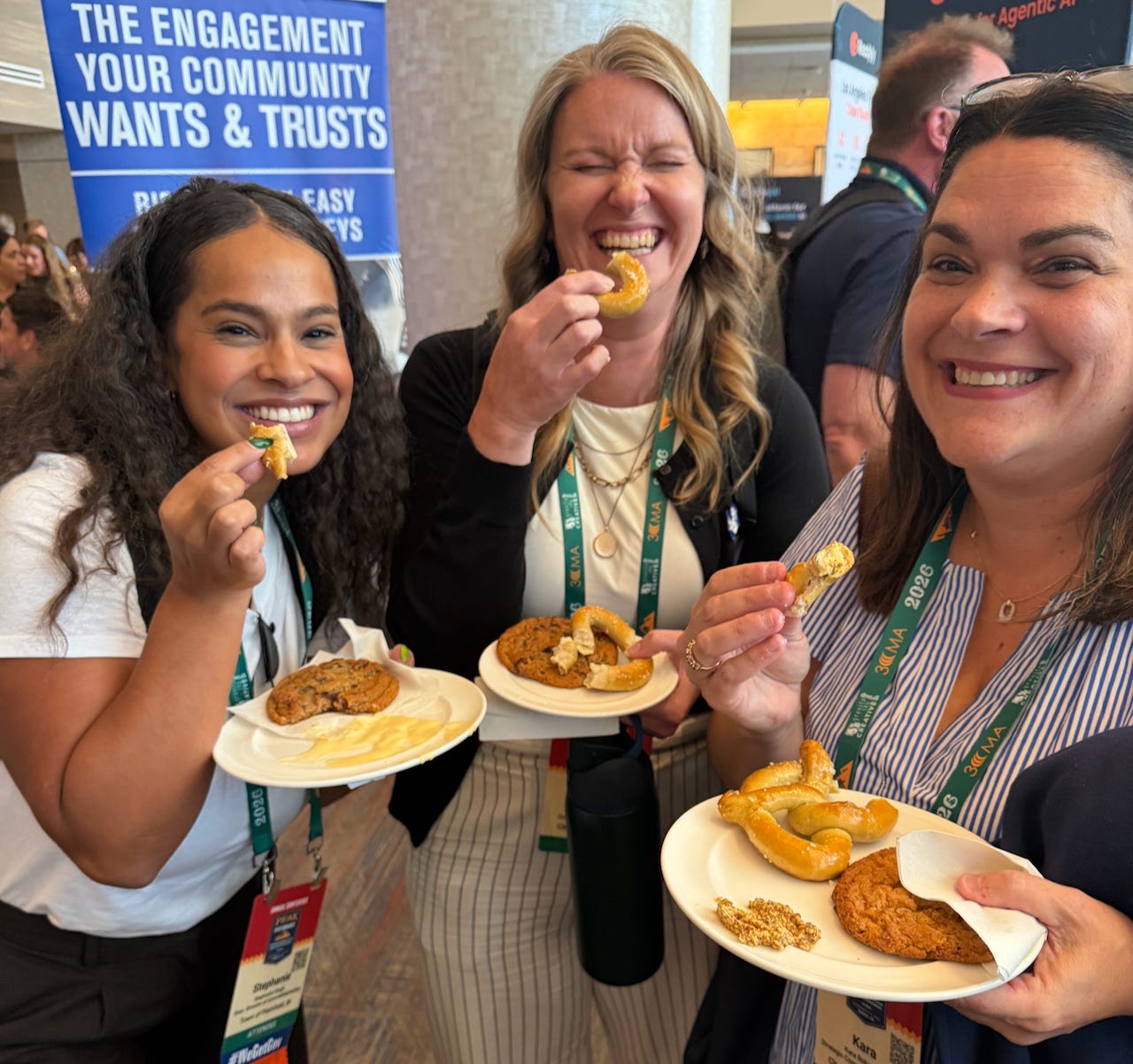
Between sessions, I asked folks two questions: What are your three biggest challenges, and how are you using AI? A few patterns surfaced.
The politics never stop. A communicator from a small Colorado town, the first full-time person his town has ever hired for the job, described elected officials who want to get down into the weeds of the work. He’s not alone. Across both days, the political layer showed up almost everywhere, whether it was council members micromanaging or funding cuts from the state and federal level.
Everyone’s doing more with less. The line of the conference came from a comms staffer from a Georgia suburb, describing a talented team of 12 stretched past its limit. Her team, she said, feels like “a rag that has been twisted and squeezed so much there’s nothing left to wring out of it.” It’s not always about headcount, either. At a water district, the frustration was bureaucratic: good ideas that die in too many layers of approval. The creative stuff never makes it out the door.
The anger is real and unrelenting. A city communicator in Florida put the public mood bluntly: “People are so freaking negative.” And the frustration isn’t only about the volume of it. A communicator in an Illinois suburb described watching misinformation spread through community Facebook groups she can’t work to correct because of records retention laws. A county in North Carolina is facing its first property reappraisal since 2023. Values have shot up, and residents “feel like the government is out to get them.”
AI use is bounded, but getting smarter. Here’s the shift I noticed over two days. Early on, people described AI as an assistant, a drafting tool, a way to turn word vomit into a first draft. By day two I was hearing craft. One communicator reverse-engineers her staff video interviews: she knows the story she wants to tell, so she has AI generate the questions that will pull the right answers out of the person on camera. Others are keeping AI on a tight leash on purpose, feeding it only city documents, or years of the city magazine, so it draws from real source material instead of making things up. What seemingly few have yet is a policy to match the pace of use. One director told me her team leans on AI daily but still lacks full organizational buy-in, mostly because they haven’t completed the policy. Using it fast, governing it slow. That was the AI story in the hallway, and it squares with what the profession is asking for in those session titles.
There’s one more thing worth calling out, because I heard it in different words from a lot of people. Almost everyone using AI heavily still draws a line at the human touches. Using it to analyze a stack of numbers is fine. Using it to answer a resident’s email or reply to a comment feels wrong to them, even a little off-putting. One person earlier in the week said seeing that kind of use “gives me the ick.” Two days of conversations tell me she’s not alone. The profession is sorting out not just what AI can do, but what it shouldn’t, and that instinct, that some parts of this work have to stay fully human, might be the healthiest thing I saw all week.
Lord knows it wasn’t the food during the breaks.
Onward and Upward.