
They Turned Off the Comments and Almost Nobody Complained
What a Tampa Bay suburb and the chicken capital of Central Texas learned when they stopped letting social media talk back

The post was a listing of open jobs. A part-time opening in human resources, a laborer position in the drainage department, the title and the salary for each, the kind of routine notice a city pushes out on the regular.
The comments turned to the pay gap. Why does the office worker make more than the laborer? And then the phrase that stung: paper pusher. The young woman who works in human resources in Copperas Cove, Texas, read it over the shoulder of the man who manages the city’s social media. That’s all I am to people, she told him.
A thousand miles away, in Dunedin, Fla., the communications director watched something similar play out under a video her team had spent real effort on. A staffer collecting leaves, a Jurassic Park bit, the sort of post that exists to make a city feel human. The comments went after the employees in it.
Two cities. Two posts meant to do something helpful for residents. The same result, and the same quiet decision forming behind it.
Different places, the same conclusion
Dunedin sits in the Tampa Bay metro, a sunny suburb of roughly 36,000. Copperas Cove sits in Central Texas, a town of about 42,000 that calls itself the chicken capital of the world and means it (Church’s, Golden Chick, KFC, Popeye’s—you name it, it’s there). They share no geography, no politics, no obvious reason to land in the same place.
They landed in the same place anyway. Both disabled comments on social media accounts this spring, weeks apart.
They are not the only ones. Over the past year, switching off comments has gone from a fringe move to something communicators now trade notes on, common enough to fill conference sessions on the pros and cons of doing it.
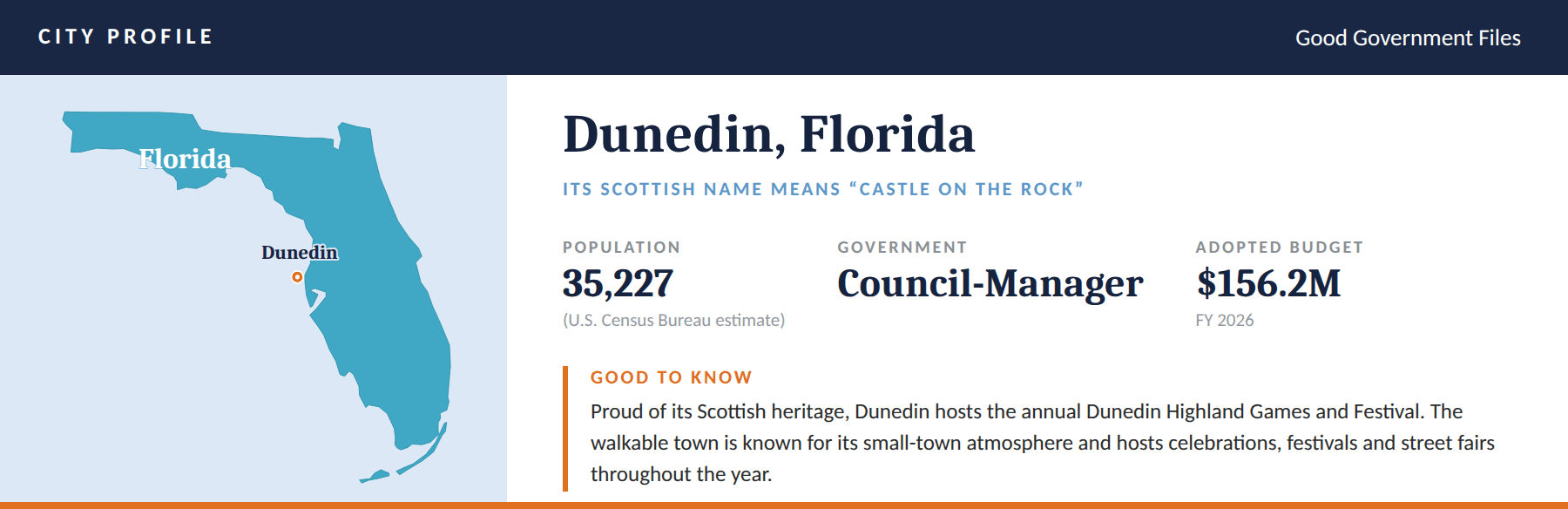
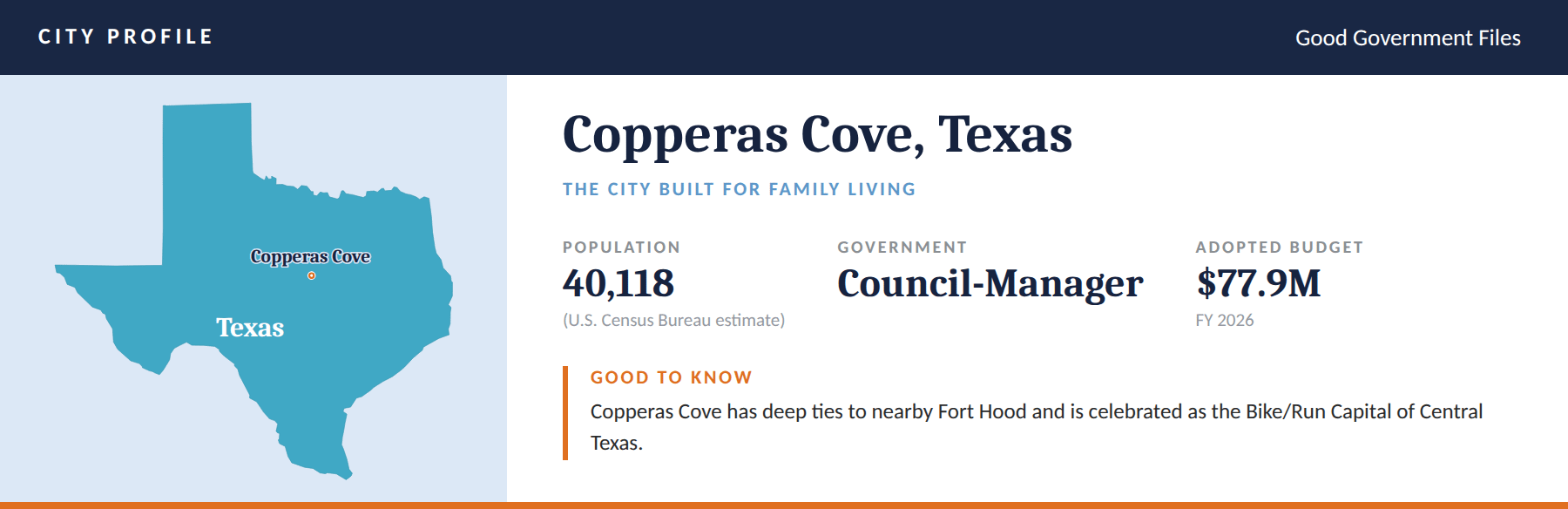
Kevin Keller has run Copperas Cove’s page for 15 years. Sue Burness came to Dunedin from a high performing shop in Dublin, Ohio, following a career in corporate and agency public relations. Neither set out to make this decision. Both arrived at it the same way, by watching a tool they believed in turn into something they no longer recognized.
What broke
The diagnosis matched almost line for line.
The comment section had stopped being a place where residents talked with their government and became a place where a handful of accounts talked at it. Burness told her commission that social media “has become antisocial in many ways.” The intent of a post, she said, was often “completely hijacked by the comments.”
Both cities described the same accounts doing it. People who don’t live there. People hiding behind invented names. Burness looks them up.
“Many of these people who are commenting are not real accounts,” she told the commission. “They don’t live here. I look them up.”
Keller has watched the same ghost accounts in Copperas Cove, residents of nowhere in particular, relentless all the same.
Both pointed past the commenters to the machine underneath them.
“The more negative the Facebook thread becomes, the more the algorithm feeds it,” Burness said. “And that’s a big part of the problem.”
Keller put the daily version of it plainly: he posts something true, and the thread argues it isn’t. He says it’s black, the comments insist it’s white, and the city spends its hours chasing the difference.
In Dunedin, Commissioner Tom Dugard named the part most cities leave unsaid. The platforms are not neutral ground. They run on a profit-centered agenda, he told his colleagues, and they “actually stimulate conflict” because conflict is what the business model rewards. He wasn’t sure what local government does about companies that “benefit from conflict.” It was a fair thing not to be sure about.
He has company outside the council chamber. Writing in The New York Times, investigative journalist Julia Angwin described a company that “tuned its algorithms to boost hatred and division.” An elected official’s gut read and a reporter’s years of work, arriving at the same place.
For Keller, there was a reputation cost too. Copperas Cove is courting commercial growth, and developers can judge a city by its Facebook page, whether or not what’s there is fair.
The question that stops most cities
Before any of this, both cities had to get past the fear that freezes everyone else: that switching off comments invites a First Amendment fight.
Dunedin’s law director put that worry to rest. Government accounts run as information platforms, essentially a bulletin board, are not public forums, and federal case law supports disabling comments on them.
“We would never have done this if we thought we were violating First Amendment rights,” Burness said. “And that is where a lot of cities struggle.”
One caveat: the legal analysis here turns on how an account is actually run, so the move is to run it past your own attorney, not to assume Dunedin’s conclusion travels automatically.
Two roads to the same door
How they got there is where the two cities part company.
Dunedin did it publicly. Burness brought a recommendation to a city commission work session on May 5, and the discussion that followed is worth the watch. She walked the commissioners through the legal ground and the alternatives and asked for consensus direction. She got it, unanimous and same-day. The policy reaches every department account on the city attorney’s recommendation the city should be consistent across the board.
Copperas Cove treated it as an operational matter. Keller built the terms of use, cleared them with the city attorney, and made the call at the department level after the city manager, Ryan Haverlah, took the temperature of the council informally. The comments are off only on the main Facebook page. The other eight departmental Facebook pages were left alone. Keller noted the police department’s, run by Lt. Krystal Baker, is so good he says he wishes he could clone her. No reason to disable what works.
Same destination, opposite paths.
The blowback that didn’t come
Both cities braced for a fight. Both were surprised.
Burness had a media statement ready and staff prepared for angry calls. Keller warned his one-and-a-half-person team to get ready for a wild ride. In Copperas Cove, the ride lasted about a week. One resident sent a respectful private message to disagree. Two people spoke at a citizens forum. Then it went quiet.
The numbers held, which neither expected. Copperas Cove has gained around 80 followers in the two months since the switch, on a base near 14,000. Dunedin’s reach stayed healthy. Content still gets seen, still gets shared.
And the response Burness heard most from residents wasn’t anger. It was relief. People who had been bullied for a positive comment, or who had simply stopped commenting to avoid the fray, told her they were glad.
What they did not do
Neither city left.
This is the part that gets lost. Comments off does not mean gone. Both cities still post every day, still run the page as the front door to city information. What changed is the expectation that the front door doubles as a debate stage.
Both put a way to reach a real person on every post. A phone number, an email, a link to the department that can actually answer.
And both leaned harder into the channels where citizen input can still happen. Burness rattled off Dunedin’s list: surveys, town halls, more than 20 boards and committees, the weekly DunediNEWS e-newsletter. Her real interest is getting commissioners in front of residents somewhere other than the dais, which is a problem other cities have been solving in person for a while now. Here’s one example among four communities I wrote about earlier this spring.

The costs they will pay
This is not a consequence-free decision, and neither pretended it was.
Keller has seen likes and shares dip, and he knows the open question that comes with it: at some point, does a page nobody can comment on stop earning the algorithm’s attention, and does the work stop feeling worth it? He has another worry he hasn’t resolved. In a tornado or winter storm, when two-way contact saves time and maybe lives, he may want the comments back. The guidance he’s been given is firm. On or off, no waffling. He isn’t sure that’s the right answer for an emergency, and he’s honest about not being sure.
That honesty is the truest note in both stories. As one conference speaker put it recently, every decision in this work solves one problem and creates the next. Turning off comments solved a real one for Dunedin and Copperas Cove. What it created, they’re still finding out.
Two cities with not much in common made the same call, weeks apart, for the same reasons, and got the same result.
The Dunedin mayor, wrapping up a long discussion, said the quiet part out loud. There’s just “something about Facebook that makes you crazy.”
Onward and Upward.