
The Downstream Effects of Polarization
Six local government communicators on how national division is reshaping local trust

Since its launch by 3CMA and CAPIO just a few years ago, Government Communicators Day has offered a chance to celebrate the professionals who connect, inform, and engage—the people behind the scenes translating complex policies into language residents can understand.
As we mark it today, the environment feels different.
When I reached out to communicators new to the profession and those who’ve been at it for decades—in cities and counties large and small—a clear pattern emerged. The work itself hasn’t changed. Budgets still need explaining. Health departments still need to communicate clearly in moments of risk. Public meetings still need facilitating.
The polarization and dysfunction of national and state politics no longer stay at those levels. They spill over. They shape how residents interpret even routine local decisions. Frustrations born hundreds of miles away now show up in comment sections about park improvements, street maintenance, or strategic plans.
In short, the job has gotten more politicized. More nationalized. Less insulated from forces outside local control.
And yet—as Government Communicators Day reminds us—the people doing this work are still showing up.
I asked six communicators three simple questions:
What’s been hardest the past year?
What keeps you going?
What do you think people outside the profession most misunderstand about what you do?
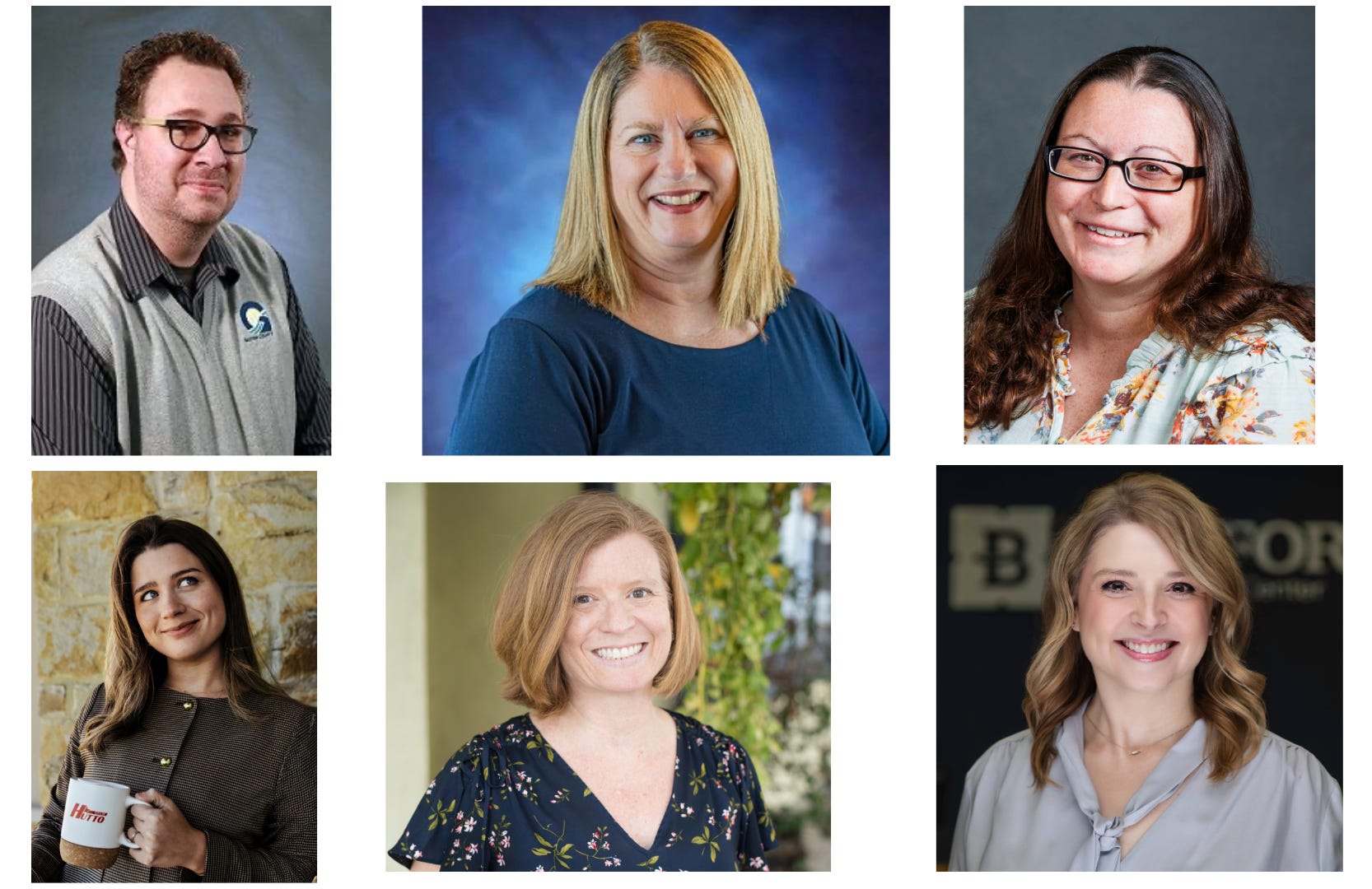
Their responses were candid, thoughtful, and—at times—unexpectedly personal.
Adam Gaub, MPA
Communications Director, Gaston County, NC
I met Adam Gaub when writing about his team’s award-winning long-form storytelling video series, Gaston Unsolved. He serves as president-elect of the North Carolina City-County Communicators association.
What’s been hardest the past year?
Messaging on issues that we no longer have federal support for. In particular, working with our health department on messaging around getting vaccinated for the measles or taking precautions if people may have been exposed to someone infected. We also saw this play out in a different way at the beginning of the year where any communication about a non-mandatory government program was met with cries of “Create a local DOGE! Cut taxes! Bring Elon here!”
What keeps you going?
Mostly bourbon (Mostly kidding). I have an excellent team, and we push each other to produce high quality work. I also believe that local government communications is more important than ever right now in a country that’s as polarized as any time since the Civil War, and in an environment absolutely rife with mis- and disinformation. We’re not going to be able to persuade everyone that we’re not part of some nefarious “Deep State,” but we have to stay focused on the people we can connect with.
What do you think people outside the profession most misunderstand about what you do?
Just about everything. I’ve had family members tell me they don’t really understand what I do. The idea of having local government communicators that are actively engaged in creating valuable content and using strategic storytelling to raise levels of awareness and trust in the community still seems a relatively foreign concept to many.
Molly Fox, CPC
Director of Communications, Bedford, TX
Molly Fox has become a good friend over the years as we served on the board of the Texas Association of Municipal Information Officers, where she’s currently president. Her shops are known for their creative, often humorous approach to storytelling; but she’s got her serious side, too.
What’s been hardest about this job in the past year?
Beyond the ongoing challenge of maintaining adequate funding for local governments from our State Legislature, I would say the political divide many people feel at the national or state level has become more visible locally than ever before. While there have always been critics in the comment section, the tone of those comments, and the immediate distrust of local leaders, feels stronger than it has in the past.
That’s discouraging, especially considering how much effort we put into building trust as an organization. It can feel as though those hard-earned trust points are diminished by decisions or actions taking place far beyond our community.
What keeps you going when the work gets heavy or frustrating?
I remind myself that I’m not the only one feeling that way. This year, I’m intentionally investing in more time together with my team. When we collaborate in person and work through projects side by side, we’ve found that our morale improves and so does the quality of our work.
I also emphasize work-life balance with my team and try to model it myself. I encourage them to take time off and fully enjoy life outside of work, because I know they’ll be more engaged and productive when they’re not burned out. The work we do is important, and we serve our community best when we’re mentally and emotionally at our strongest.
I would be remiss if I didn’t mention the importance of connecting with your fellow municipal communicators. A lunch or even a quick phone call with one of these colleagues can feel like the best kind of medicine when the job starts to feel heavy. No one understands the unique challenges we face quite like those who are navigating them alongside us.
What do you think people outside the profession most misunderstand about what you do?
We do our jobs best when we’re included in the decision-making process early. The more context and information we have, the more effectively we can communicate, especially when we understand the nuances and potential sensitivities surrounding a project.
In addition to sharing information, we also serve as listeners within the community. That perspective allows us to be strong advisors to staff who may not be as closely attuned to concerns or pressure points. When communicators are brought to the table early, we can help shape decisions in ways that strengthen trust, clarity, and public understanding.
Annette Privette Keller, MPA
Director of Communications, Kannapolis, NC
I got to know Annette Privette Keller during my time on the 3CMA board, where she is the immediate past president. She’s a veteran in our business, and I can attest she cares as deeply about the profession as she does her community.
What’s been hardest the past year?
Moving forward without following the strategic plan we worked so hard to put into place.
The cataclysmic shift in community attitudes that was reflected in the election.
The whiplash of change in our organization.
We’ve always had change but with strategy and I have no problem with it but now we are changing at a far greater pace to accommodate a few voices and abandoning our strategic plan. This seems to be leading to far greater stress with more hours spent in the office garnering less return on that effort.
What keeps you going?
My personal goal to always be the best I can be and to serve the residents to the best of my ability.
Diet Mountain Dew and time with family.
Cheryl Mall
Public Information Officer, City of Melbourne, FL
Cheryl Mall is a new friend. I met her during last month’s GGF Office Hours that focused on how to take care of yourself in this dynamic, stress-filled profession. In fact, Cheryl referenced that topic in her first response.
What’s been hardest?
I think back to what Kara Roberson said—that the past year just felt “heavier.” I think the hardest part of the past year was acknowledging this heaviness and also realizing that things may only become more challenging—and that they may become more challenging in ways that we can’t even imagine right now.
What keeps you going?
I’ve always been driven by a desire to help others. It’s motivating to work in local government alongside so many people who have dedicated their careers to civil service. I also know that we’ve made it through a lot of difficult times as a community and as an organization, and I have faith that we will be able to get through whatever challenges the future may throw at us.
What do you think people outside the profession most misunderstand about what you do?
I’m not sure many people outside of government circles would know what a public information officer is or does. But I don’t think that’s unique to my profession. There isn’t a lot of understanding about the many types of roles in local government and the many different services we provide—even though these are services that our residents use and rely on every day. I believe that sharing these stories is an important part of my job as a government communicator, and I consider it a privilege to get to do this work.
Trisha Hall, CPC
Communications Manager, City of Maryland Heights, MO
I got to know Trisha Hall two summers ago when she was at the Certified Public Communicator (CPC) program at TCU. I wrote about how she applied what she learned in the program to help the city pass a use tax proposition that had failed twice before.
What’s been hardest the past year?
Watching America divide itself. We should be bipartisan, right? If only we could have conversations with each other, we would learn that we have more in common than we think (at least, that’s my hope for humanity). Also, the distrust for all government is trickling down to the local level and AI is not helping with building trust and being transparent. And trying to figure out what crisis I should be preparing for in our future.
(Sorry. That was dark.)
What keeps you going?
My job gives me purpose. I know that what I do has an effect on my community. It’s the sense of wanting to make my city a great place for everyone around me and keeping it that way for future generations. Finding the things to celebrate and having a plan of action when times get tough.
What do you think people outside the profession most misunderstand about what you do?
That all government is the same … Or that we can solve the world’s problems with a push of a button. That it’s easy to get information out and if they aren’t informed, it was our fault. That we aren’t actual human beings or that we don’t care.
Abby Fenton
Communications Manager, City of Hutto, TX
I got to know Abby Fenton when she was working with my good friend and former colleague Brian Ligon in her hometown of Mont Belvieu, Texas. Their branding campaign I featured was nothing short of spectacular (and won a Savvy Award!). Last year, Abby took a big step professionally, taking on her current role in Hutto.
What’s been hardest the past year?
Watching trust in government erode. For those of us in communications, trust is the foundation of everything we do, yet lately it feels like we’re starting every conversation at a disadvantage. The skepticism isn’t always about local issues, it’s often tied to the broader political climate, and that frustration spills over into city government even when the connection isn’t there. We’re doing real work that matters—projects that improve neighborhoods, information that answers questions, solutions that address concerns. But often, even the most thoughtful response is met with “I’m sure that’s what they want us to think.” And don’t get me started on the “kickbacks for city staff.” If those exist, mine must be lost in the mail. That disconnect between the work we’re doing and the suspicion we’re met with has definitely been the toughest part of the year.
What keeps you going?
The people I work with. City staff are some of the most dedicated people I’ve ever met. I get to watch folks in every corner of the organization pour themselves into creating community and building places that people genuinely love. There aren’t many jobs where you see such a wide mix of people doing completely different work, all driven by the same goal of helping residents love where they live. When you see that kind of commitment day after day, it’s hard not to stay motivated.
What do you think people outside the profession most misunderstand about what you do?
How much of this job is intangible. People often see the social media posts, the website updates, the press releases, and assume the work is about pushing out content. But the real goal is so much bigger than that. We’re trying to build trust. We’re trying to build pride. We’re trying to shape how people feel about where they live. Communication is the tool we use, but the outcome we’re working toward is ultimately a feeling.
Trust. Pride. Belonging.
Why This Day Matters
Government Communicators Day was created to shine a light on work that often happens out of view. For most of the year, these professionals operate behind the scenes—translating policy, responding to crises, answering questions, absorbing criticism, and trying to build trust one interaction at a time.
This year, that work feels less insulated. More exposed. More directly affected by forces well beyond City Hall.
And yet.
They’re still showing up.
They’re still drafting the posts, answering the emails. Still responding to the comments. Still pushing for effective public meetings, advocating for residents to be heard and understood. Still trying to make sure the work of local government—the real work—doesn’t get lost in the noise.
There’s plenty of dysfunction in our politics right now. Plenty of polarization. Plenty of shouting.
But in communities across the country, there are communicators quietly doing something really hard: building understanding in an environment that often resists it.
That’s worth recognizing.
Not just today.
But especially today.
Onward and Upward.